

Invisalign vs Braces for Adults What Is the Real Difference?
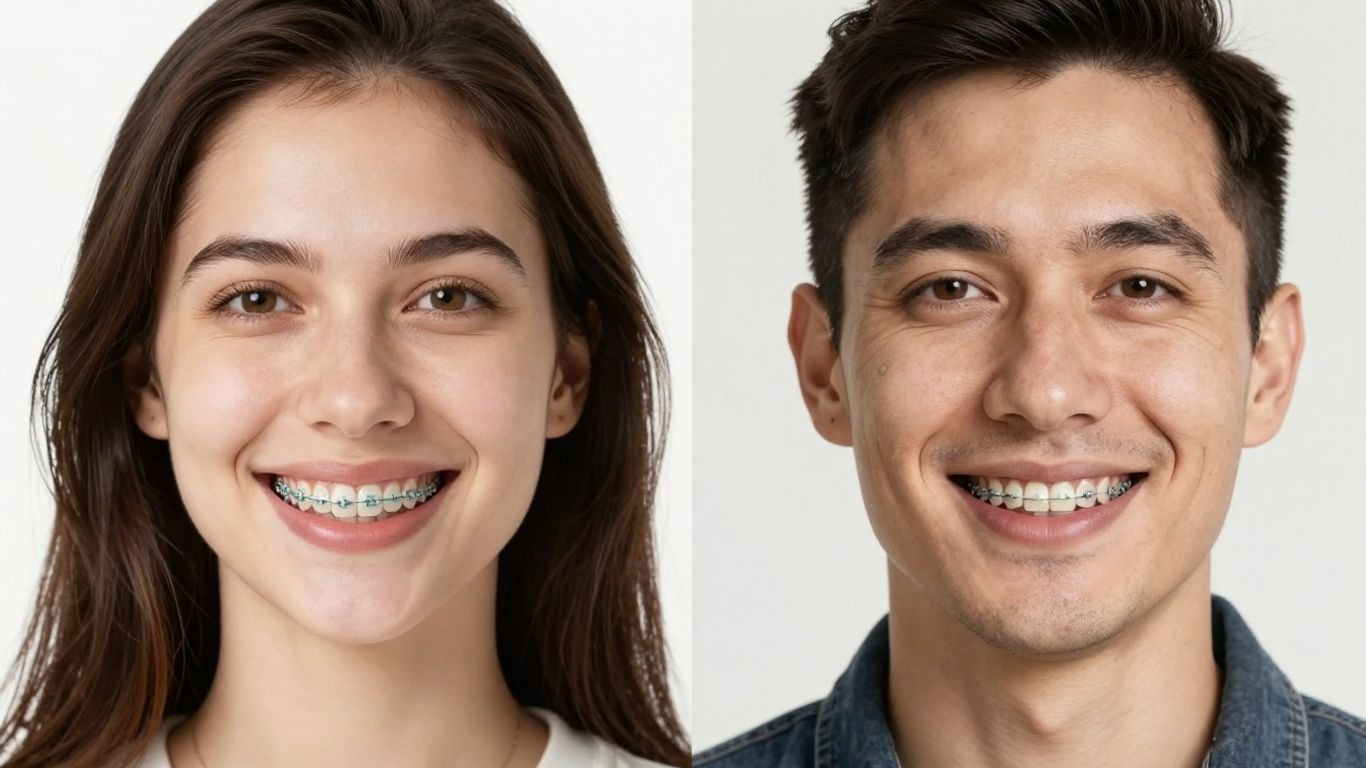
So, you're an adult looking to straighten your teeth, and you've heard about Invisalign and traditional braces. It's a common dilemma, and honestly, figuring out the real difference between them can feel a bit overwhelming. Both aim to give you a straighter smile, but they go about it in pretty different ways, impacting your daily life and treatment experience.
Which option gives faster results for adult teeth?
When it comes to speed, it's not always a clear win for one over the other. Both Invisalign and braces can take anywhere from several months to a couple of years, depending on how complex your dental situation is. For simpler cases, Invisalign might sometimes feel a bit quicker because you're swapping out aligners every week or two, making steady progress. However, for really tricky stuff, like severe crowding or significant bite issues, traditional braces might actually be more efficient at moving teeth into their final positions.
Here's a quick look at how they stack up:
- Invisalign: Uses a series of clear, custom-made aligners that you switch out every 1-2 weeks. Each aligner gently shifts your teeth a little bit.
- Traditional Braces: Involve metal brackets attached to your teeth, connected by wires. Your orthodontist adjusts these wires periodically to move your teeth.
The truth is, the 'faster' option really depends on what your teeth need. Don't just assume one is always quicker. It's all about the specific movements required to get your smile just right.
It's worth noting that consistency is key with both. If you don't wear your Invisalign aligners for the recommended 20-22 hours a day, your treatment will definitely take longer. Similarly, if you miss adjustment appointments for braces, that can also slow things down.
Clear Aligners for Adults: Are They as Effective as Braces?
So, you're thinking about straightening your teeth as an adult, and you've heard about clear aligners, like Invisalign. The big question is, do they actually work as well as the old-school metal braces? It's a fair question, and the answer is... mostly yes, but with a few caveats.
Can clear aligners fix all the same issues as metal braces?
For a long time, metal braces were the go-to for pretty much any orthodontic problem. They're super strong and can handle really complex stuff, like severe crowding or major jaw alignment issues. Think of them as the heavy-duty equipment of teeth straightening.
Clear aligners for adults have gotten way better, though. They can now fix a lot of the same problems that braces can, especially if your issues are mild to moderate. We're talking about things like slightly crooked teeth, small gaps, or minor bite problems. For many adults, clear aligners are just as effective as braces for achieving a straighter smile.
However, there are still some situations where braces might be the better bet:
- Really severe crowding: If your teeth are super packed in, braces might move them more predictably.
- Big jaw misalignments: Sometimes, braces are needed to help guide jaw growth or correct significant bite issues that aligners can't manage alone.
- Complex rotations: If a tooth is twisted way out of place, braces can sometimes offer more precise control.
Basically, if your case is pretty straightforward or moderate, clear aligners are likely going to do the trick just fine. If you've got a really complicated situation, your orthodontist might still lean towards braces.
It's important to remember that the effectiveness of clear aligners relies heavily on you wearing them consistently. If you don't wear them for the recommended 20-22 hours a day, they just won't work as well, no matter how simple your case is.
So, while clear aligners are super effective for a lot of people, they aren't a magic bullet for every single dental problem out there. It really comes down to what your specific teeth need.
Adult Braces Options — Which One Is Right for You?
So, you're an adult looking to straighten your teeth, and you've heard about all the adult braces options out there. It can feel a bit overwhelming, right? Gone are the days when braces just meant a mouth full of metal. Today, you've got choices, and figuring out which one fits your life and your smile goals is key. Let's break down what's available.
What factors should adults consider when choosing braces?
When you're deciding between different types of braces, think about a few things. Your lifestyle is a big one – are you constantly in meetings or on video calls? Do you have a job where appearance is super important? Then maybe something less visible is better. Also, consider how complex your dental issues are. Some problems are just easier to fix with traditional braces, no question. And let's be real, cost is always a factor, though sometimes paying a bit more upfront for a better or faster result is worth it.
- Complexity of your bite/alignment: Simple crowding or a slightly crooked tooth? You might have more options. Major bite issues or significant gaps? Traditional braces are often the go-to.
- Aesthetics: How much do you care about how they look while you're wearing them? This is where clear aligners really shine, but even traditional braces have come a long way with ceramic or lingual (behind the teeth) options.
- Lifestyle and commitment: Do you need something you can take out to eat or clean? Or are you okay with a fixed appliance? Some people prefer the "set it and forget it" nature of braces, while others love the flexibility of clear aligners.
- Budget: Different options come with different price tags. It's good to get a clear picture of the total cost, including any potential adjustments or retainers.
It's not just about picking the cheapest or the most discreet option. The best choice is the one that will actually get you the results you want, comfortably and efficiently, fitting into your daily life without too much fuss. Your orthodontist is your best guide here.
| Type of Brace | Appearance | Best For | Potential Downsides |
|---|---|---|---|
| Traditional Metal | Silver or colored brackets and wires | Most complex cases, significant tooth movement, budget-conscious | Most visible, can irritate gums, dietary restrictions |
| Ceramic Braces | Tooth-colored brackets, clear or white wires | Adults wanting less visible braces than metal, moderate to complex cases | Can be more brittle, may stain if not cared for, slightly higher cost than metal |
| Lingual Braces | Brackets and wires on the inside of teeth | Adults prioritizing near-invisibility, moderate to complex cases | Can affect speech initially, harder to clean, higher cost, not for all cases |
| Clear Aligners | Custom-fit clear plastic trays | Mild to moderate crowding, bite issues, adults prioritizing aesthetics | Requires strict compliance (22+ hrs/day), not ideal for very complex issues |
Is Invisalign Worth It for Adults in Terms of Cost and Results?
So, you're wondering if Invisalign is actually worth it for adults, especially when you look at the price tag and what you actually get out of it. It's a totally fair question! Many adults are looking for a way to straighten their teeth without looking like they're wearing a mouth full of metal, and Invisalign seems like the dream solution. But does it deliver?
How does Invisalign pricing compare to traditional braces for adults?
Okay, let's talk money. For a long time, Invisalign was seen as the pricier option. But honestly, the gap has really narrowed. Depending on where you live and how complex your dental situation is, the costs can be pretty similar to traditional metal braces. You're generally looking at a range, and it's not uncommon for both to fall somewhere between $3,500 and $8,500. Some places might even have braces slightly cheaper, while others might have Invisalign at a similar or even lower price point. It really depends on the orthodontist and the specifics of your treatment plan. Don't forget to check if your dental insurance has an orthodontic benefit – it often covers both options similarly, which can make a big difference.
Here's a quick look at what you might expect:
| Treatment Type | Estimated Cost Range | Notes |
|---|---|---|
| Traditional Braces | $3,000 - $7,000 | Can vary based on material (metal, ceramic) |
| Invisalign Aligners | $3,500 - $8,500 | Depends on complexity and treatment length |
The real cost-effectiveness comes down to the results you achieve and how smoothly the treatment goes.
What factors should adults consider when choosing braces?
When you're an adult looking to straighten your teeth, there's a lot more to think about than just how they look. Your lifestyle, your job, and even your personal habits play a huge role in which treatment will actually work for you.
- Your Daily Routine: Are you someone who's super disciplined and can remember to take aligners out for meals and put them back in? Or do you tend to forget things? Invisalign requires you to wear the aligners for 20-22 hours a day. If you're not good about that, your treatment might take longer or not work as well.
- Your Job/Social Life: If you have a job where you're constantly talking to clients or giving presentations, the nearly invisible nature of Invisalign is a massive plus. Nobody wants to feel self-conscious during important meetings.
- Dietary Habits: With braces, you have to say goodbye to sticky, chewy, and hard foods. Invisalign lets you remove the aligners, so you can eat pretty much anything. Just remember to brush your teeth before popping them back in!
- Oral Hygiene: Keeping braces clean can be a chore. You need special brushes and flossers. With Invisalign, you just take them out, brush your teeth like normal, and clean the aligners. It's generally easier to maintain good oral hygiene.
- Complexity of Your Case: While Invisalign has gotten way better, it might not be the best choice for really severe crowding, major bite issues, or significant jaw alignment problems. For those, traditional braces might still be the most effective route.
Ultimately, the 'best' option isn't just about which one is technically superior, but which one fits your life and your specific dental needs. It's about finding a treatment that you can stick with to get the smile you want without making your life miserable in the process.
How Long Does Invisalign Take for Adults vs Braces?
So, you're wondering about the timeline, right? How long does Invisalign take for adults compared to good old-fashioned braces? It's a super common question, and honestly, there's no single answer that fits everyone. It really depends on what's going on with your teeth and how complex your case is.
Generally speaking, Invisalign treatment for adults often falls within the 12 to 18-month range. Some simpler cases might wrap up in as little as 6 months, while more involved ones could stretch to 24 months or even a bit longer. The key here is consistency. You've got to wear those aligners for about 20-22 hours a day for them to do their magic. Take them out to eat and brush, sure, but otherwise, they need to be in.
Traditional braces, on the other hand, tend to have a slightly longer average treatment time, often ranging from 18 to 24 months. For really complex issues, like severe crowding or significant bite problems, braces might even take longer than that. The reason for this difference is how they work. Braces use wires and brackets that are adjusted periodically, which can sometimes move teeth a bit more predictably for certain types of corrections. Invisalign uses a series of custom trays, and each one makes small adjustments. It's a different approach, and for many adults with mild to moderate issues, it can be just as effective, if not faster.
Here's a quick rundown:
- Invisalign: Typically 6-18 months, but can vary. Requires strict adherence to wearing the aligners.
- Braces: Often 18-24 months on average, sometimes longer for complex cases.
It's important to remember that these are just averages. Your orthodontist will give you a much more precise estimate after looking at your specific teeth and creating a treatment plan. Factors like how quickly your teeth move and whether you miss appointments or don't wear your aligners as directed can definitely impact the total time.
So, Which One Wins?
Alright, so we've gone over the nitty-gritty of Invisalign versus traditional braces for us adults. Honestly, there's no single 'better' option here. If you're all about keeping your treatment on the down-low and don't mind taking things out to eat or brush, Invisalign is probably your jam, especially for less complicated stuff. But if your teeth are doing some serious gymnastics or you just want a 'set it and forget it' vibe, good old-fashioned braces might be the way to go. The biggest takeaway? Chat with your orthodontist. They're the pros who can look at your specific situation and help you figure out which path leads to that awesome smile you're after.
Frequently Asked Questions
How fast can I get results with Invisalign compared to braces?
For simpler teeth straightening jobs, Invisalign might show results a bit quicker because you switch aligners every week or two. Braces, on the other hand, work more slowly by gradually tightening wires, which can take a bit longer, especially for really tricky problems. But remember, how fast you see changes also depends a lot on how well you stick to the treatment plan, like wearing your aligners as much as you should.
Can clear aligners like Invisalign fix all the same teeth issues as metal braces?
Invisalign has gotten really good and can fix most common teeth problems. However, for very complex issues like major jaw misalignments, severe crowding, or teeth that need to be turned a lot, traditional braces are still often the best choice because they offer more control and power to move teeth precisely.
What should adults think about when picking between Invisalign and braces?
Adults should consider a few things. First, how important is it that the treatment is not obvious? Invisalign is nearly invisible, while braces are more noticeable. Also, think about your lifestyle – can you commit to wearing aligners 20-22 hours a day? Braces are fixed, so you don't have to worry about taking them out. Your budget and the complexity of your dental issue are also big factors.
Is Invisalign a good investment for adults, considering the cost and the results?
Invisalign can be a great investment for adults who want straighter teeth without the look of metal braces. The cost is often similar to braces, especially if your insurance covers orthodontics. The results can be just as good for many people, and the convenience of being able to remove them for eating and cleaning is a big plus that many adults find makes it totally worth it.
How long does Invisalign treatment usually take for adults, and how does it compare to braces?
On average, Invisalign treatment for adults typically takes about 12 to 18 months, but this can vary. Braces often take a bit longer, usually around 18 to 24 months. The exact time for both depends on how much your teeth need to move and how consistently you follow the treatment plan.
Are there any downsides to choosing Invisalign over braces?
Yes, there can be a few. You really need to be disciplined to wear your Invisalign aligners for 20-22 hours a day for them to work effectively. If you forget or don't wear them enough, treatment can take longer or not work as well. Also, for very complex bite issues or severe crowding, braces might still be a more powerful option.
Blog Post Author

Contributed by DentalROI
DentalROI provides relevant dental content to help providers educate patients. The statements, services, and products referenced in this article have not been evaluated by the Food and Drug Administration, and they are not intended as a substitute for professional medical advice, diagnosis, or treatment. Always seek the advice of your dental provider with any questions or issues you may have. Specific recommendations may vary in different circumstances, so individual consultation is important.